What is a Model Plan Library
The City of Tucson created a Model Plan Library to improve access to architect-designed plans at a lower cost. These plans are stamped and ready to use. With only a site plan created, the construction document set is already stamped and approved, allowing owners to have permits in as little as 15 days.
What is an ADU
A Casita, or Accessory Dwelling Unit (ADU), is a secondary home located on the same lot as an existing residence. Since January 2022, Tucson has permitted ADUs in zones that allow residential uses. An ADU is generally tied to the existing house utilities like sewer, water, and electricity; however, it functions as an independent residence with its own address. We generally see ADUs permitted to house elderly parents, for use as an art space, expand livable space for smaller homes, and become income-generating rentals.
How Much does an ADU cost?
The total cost can vary widely depending on how you approach the build, and we have multiple units built both as a DIY approach and as a full contractor build:
Our Plans:
Studio / 1B 459 SF $2,500
1 BD / 1 BA 646 SF $3,000
Site Plans $500
DIY/Owner-Builder Construction Costs: For the 1 bedroom, expect to spend around $100,000 + (depending on the amount of labor you do). We designed this unit to be self-buildable because one of the biggest ways to access affordability is to put in your own time or labor. To build, you sign an owner/builder affidavit that allows you to take on the build yourself. This will allow you to either work as a contractor to organize schedules and trades or to perform all or part of the labor.
(We personally built the unit to test the affordability, and our build was approximately $100,000. We hired a concrete crew, plumber, electrician, tiler, and plaster crew. The rest of the labor was self-performed.)
Contractor Build Construction Costs: (no involvement): Typically between $185,000 and $230,000+ for the 1 bedroom. People have chosen to add site walls, complete demolition on site, modify materials, and add extra concrete pours for pads or walkways. All of the additional asks from a contractor will raise the price. The average pricing we are seeing is around $200,000.
What is the Detached Sonoran ADU?
We’ve been designing and building in Tucson for nearly a decade and have put a great deal of thought into every aspect of this design. Our goal was to balance construction costs, long-term ownership costs, and efficient systems. While some elements may have higher upfront costs, we’ve carefully considered their long-term value. For example, a metal roof may cost around $2,000 more than a typical roll-on roof, but the difference pays off over time. Roll-on roofs often require recoating every 5-10 years under Tucson’s intense sun, whereas a metal roof can last 40-70 years with little to no maintenance.
That said, we were incredibly careful in balancing higher cost items with low cost and simple solutions to create an overall competitive cost ADU, while maintaining a quality experience.
Walls
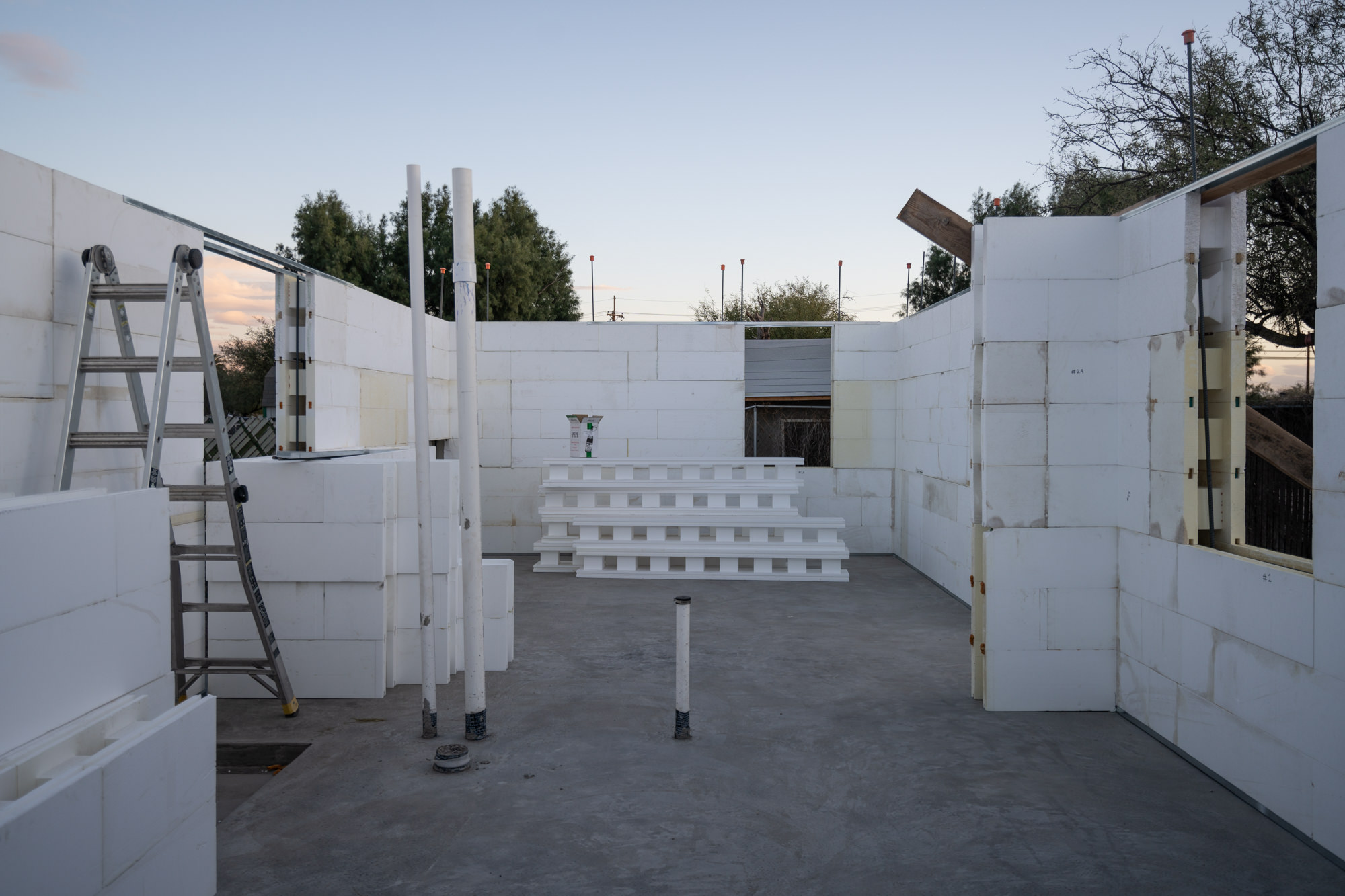
Modern Insulated Concrete Form (ICF) construction was developed in the 1970s and has since been used around the world. We chose this method because it offers several key advantages:
- ICF blocks are locally available and made in Arizona
- The blocks provide excellent insulation (standard insulation is R-19, while ICF is R-28)
- The blocks are less vulnerable to pests, rot, or damage
- The blocks are lightweight and easy to build as a homeowner/builder.
Windows and doors
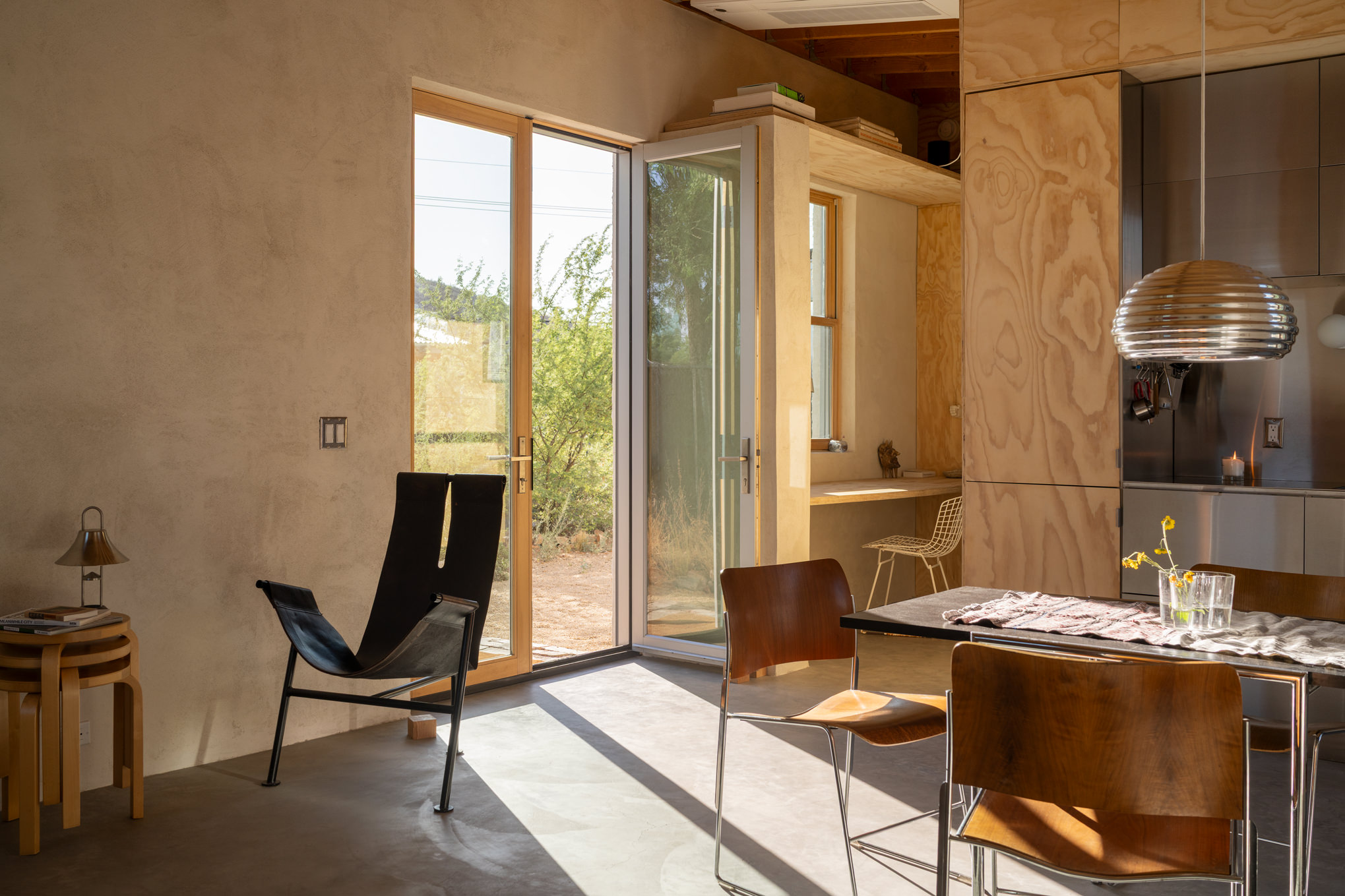
We selected windows that are compatible with our historic neighborhoods. Many of our central neighborhoods require double-hung windows, and some require wood interiors and exteriors. We generally prefer wood interiors with aluminum-clad exteriors for ease of maintenance, cost effectiveness, durability, and beauty.
Cabinetry and Casework
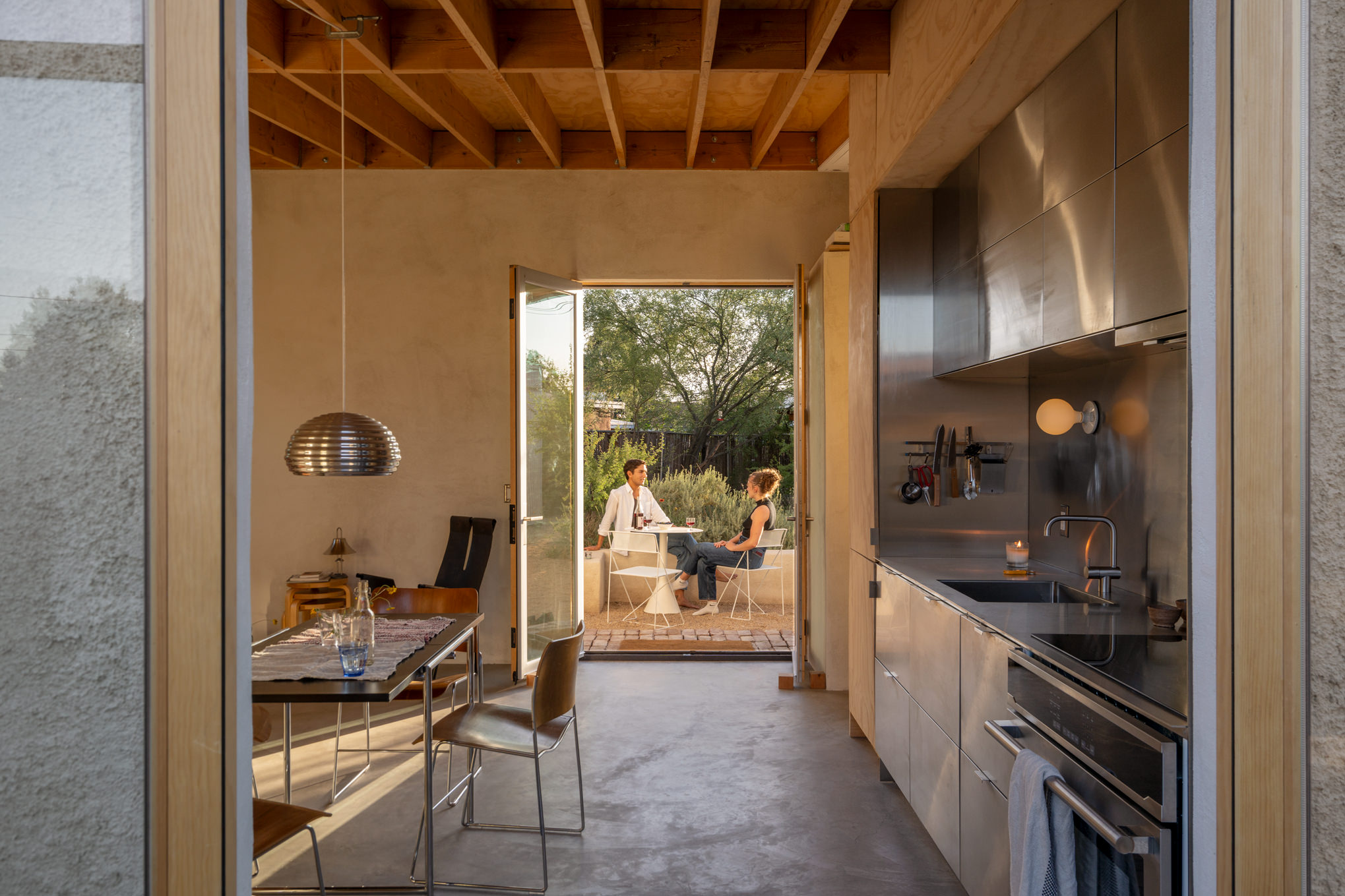
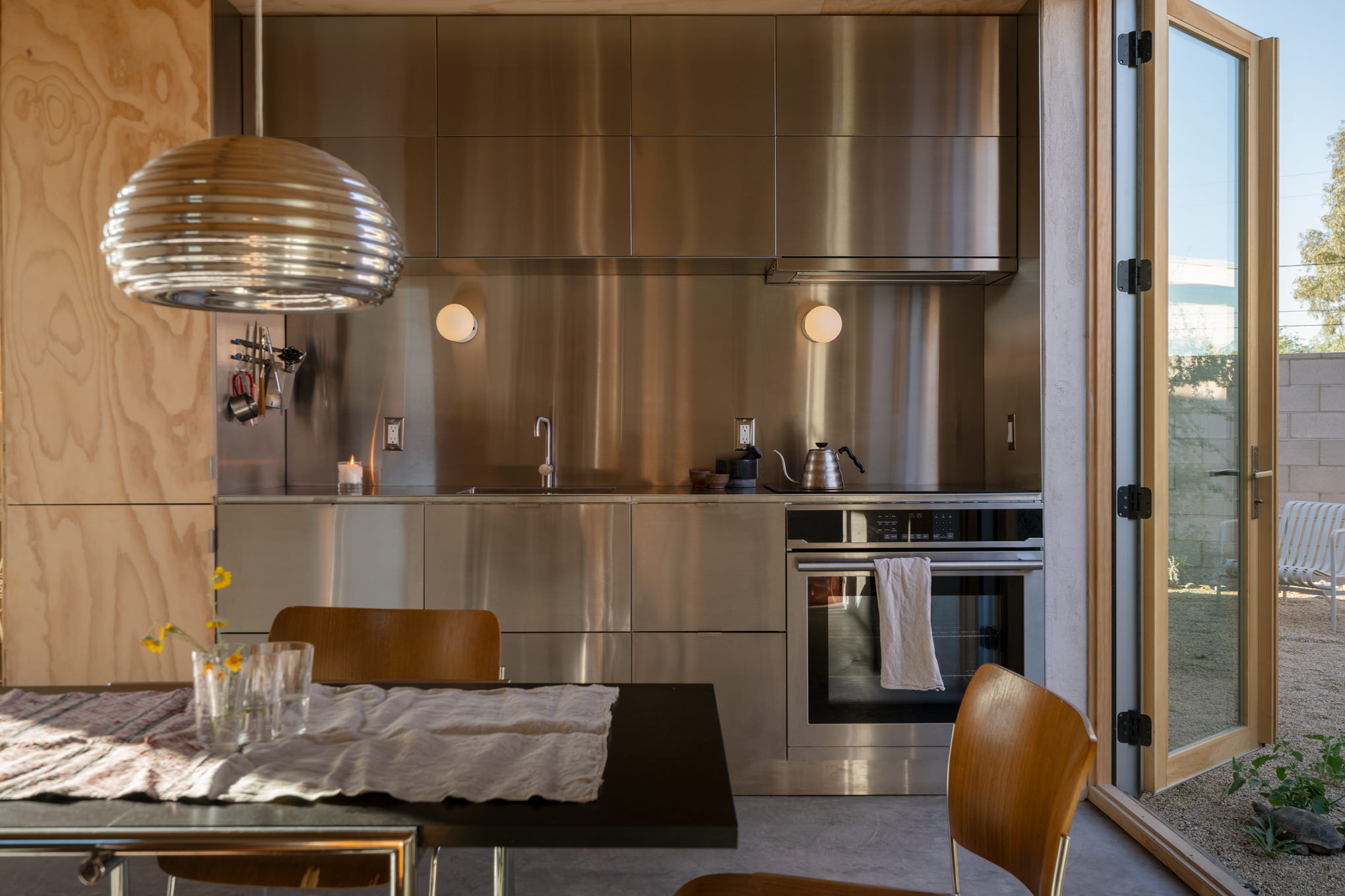
We standardized the sizes of the kitchen and closet systems to allow easy choices of products like IKEA, custom cabinetry, or salvaged. We wanted a guarantee that an easy product is available, while also allowing the space to customize or upgrade however you would like.
Wall Plaster
We clad our ADU both inside and out with lime plaster. Lime plaster sequesters carbon, cleans air, and provides a durable finish. The finish of plaster is determined by technique and sand grit, and can be smooth, sanded, dashed, or any other available texture.

roof system
The house is fitted with 6" of rigid insulation and then topped with a metal roof. We recommend the Galvalume finish, which meets Tucson's Cool Roof Ordinance for accessory dwelling units. The galvalume finish provides a Solar Reflectance Index (SRI) of approximately 65, exceeding the city's minimum requirement of 60. Compared to elastomeric-coated roofs, metal roofing offers superior long-term durability, often lasting 40 to 70 years with minimal maintenance. Additionally, the high SRI value reflects more solar radiation, helping reduce cooling loads and keeping the ADU comfortable during Tucson's hot summers.

solar ready

Our unit is designed with both electrical capacity for the addition of solar panels, but also an easy system for installing the solar panels on the ADU roof.
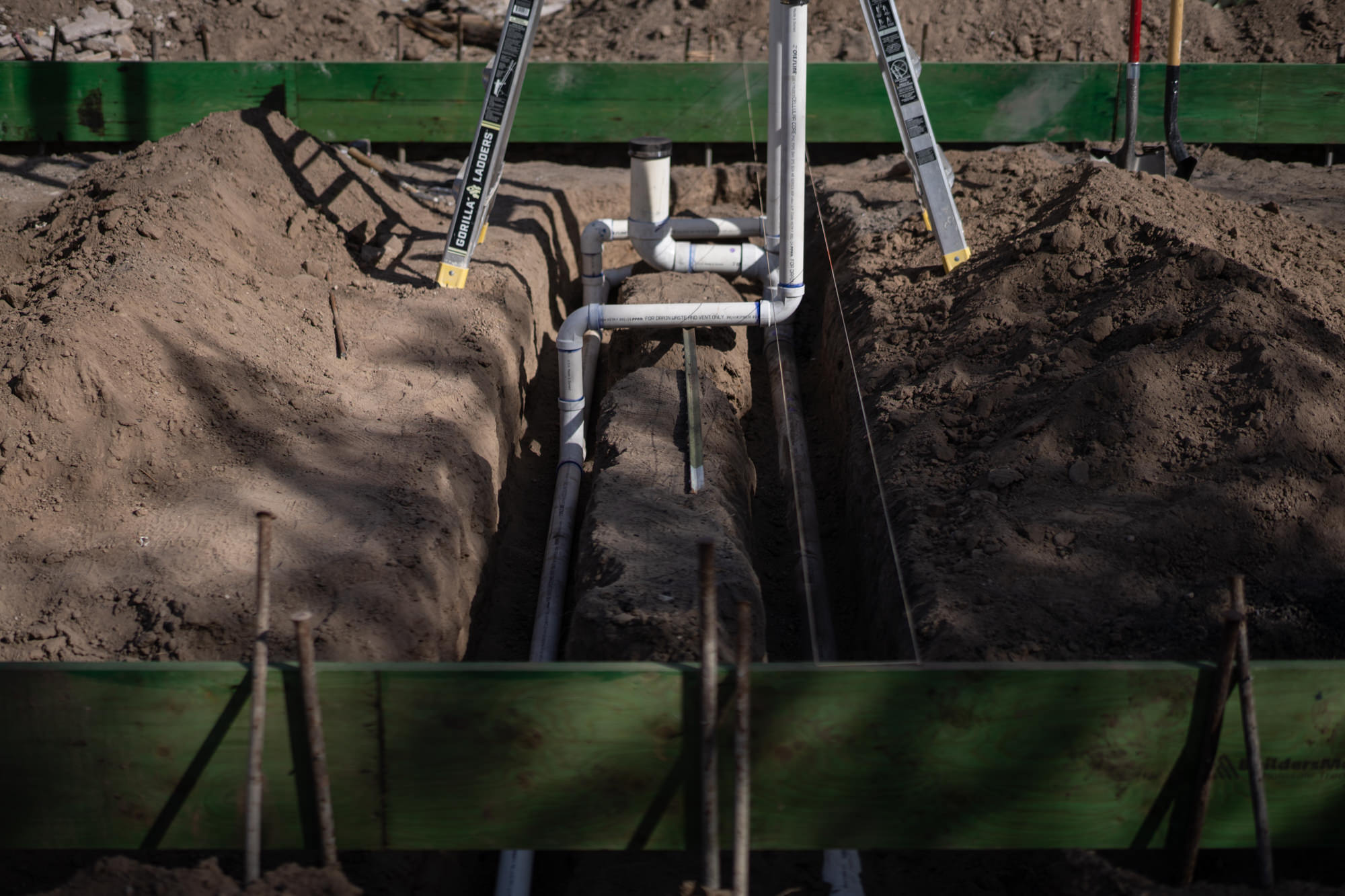
plumbed for graywater
We run all plumbing along one wet wall to consolidate water and venting into one area of the house. This allows for ease of installation, but also allows for two systems: blackwater (toilet and kitchen sink), and graywater (bathroom sink and shower). As both plumbing lines exit the house, a diverter valve allows water to be directed to an underwater percolation system that waters trees and landscape.